Netflix Series (4 Episodes – 1 hour each (approx.) – Rated 15
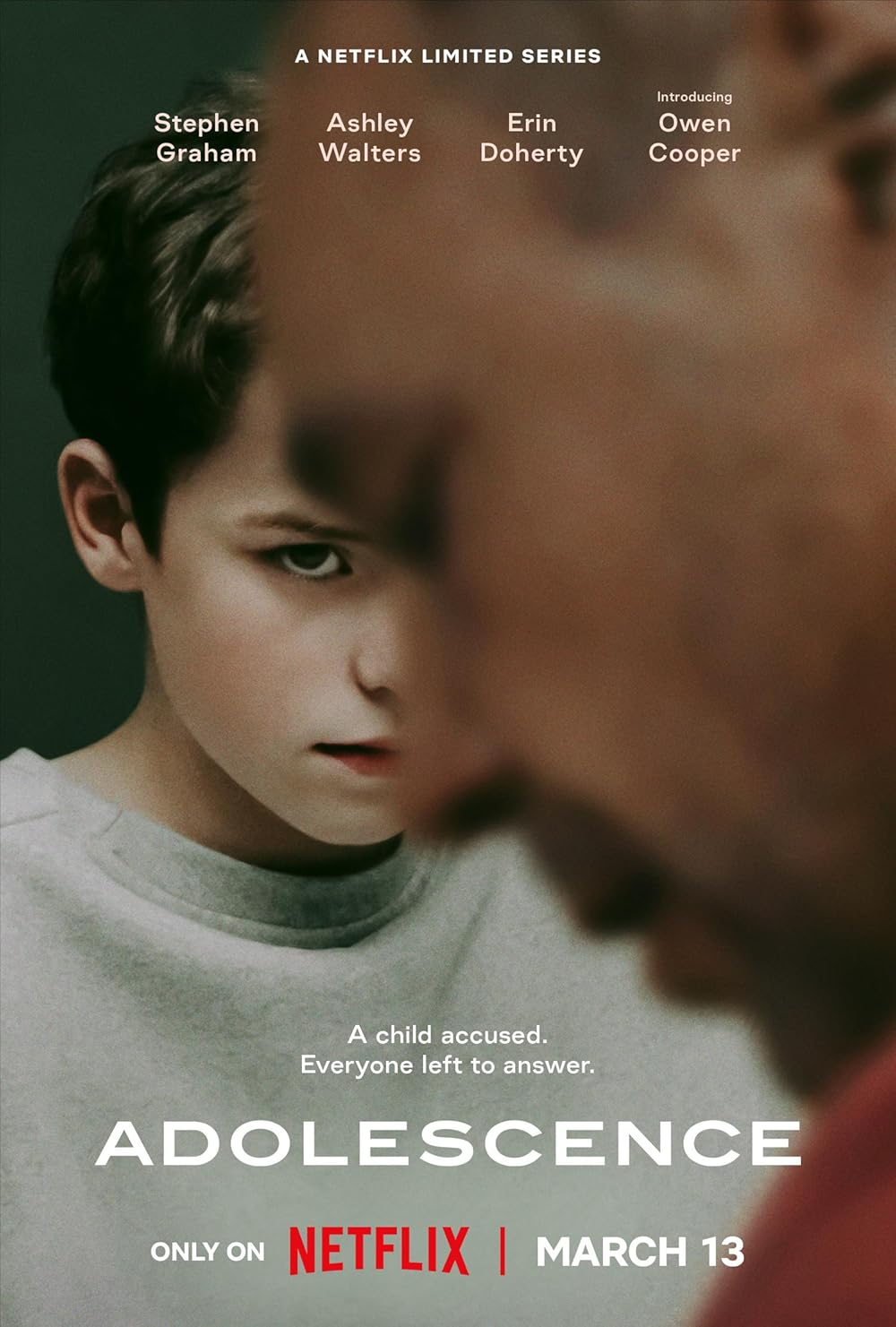
Adolescence tells the story of a 13-year old boy accused of murdering a classmate and the events that unfold as part of the police investigation and evaluation by a psychiatrist and the impact the accusation and events have on the members of the boy’s family and friends.
Starring Stephen Graham (Snatch, This is England), Ashley Walters (Top Boy) and newcomer Owen Cooper as the accused boy, each episode is filmed in a single take resulting in some astonishing and slick-looking filming as it follows the actors through their scenes. It’s quite remarkable how some scenes – with the aid of drones – have been pulled off and the acting, particularly from Cooper whose performance is nothing short of spectacular, is highly commendable.
I watched Adolescence without knowing anything about the incident(s) that apparently inspired the story. As a result, I didn’t get anything that the wokies are going on about it being anti-white, racist, etc., and just saw it as a moving story with incredible technical effects and brilliant performances, which lent itself to a commentary on how kids, any kids, black or white, can be so heavily influenced by social media, bullying, and “influencers”.
At the end of the day, it’s a work of fiction and people (even this God-awful Labour government) are jumping on the “documentary” aspect of it quite wrongly in my opinion. But then people nowadays seemingly have to read something into everything without just enjoying things for what they are and something that might not be deliberate on the part of the film-makers.
I watched this series and, as I said before, not once did I think about race during it. Not once did I consider it to be propaganda. It was an interesting story with great performances and incredible technical expertise in pulling off one-take per episode. Yes, there are parallels with real-life situations but you could literally take any television show, series or movie and draw a parallel with real-life events. Myself, I’d just rather see it as entertainment than worry about woke-this or woke-that.
As the copyright slogan goes, “Any resemblance to persons, either living or dead, is purely coincidental”.
 David E. Gates